First Great Western Trains HST set

Flying Fag HST with an oily nose

 The picture shows a First Great Western Trains HST set, still in its actually quite nice “flying fag packet” livery (unofficial name, in Dutch een haastig sigarettenpak), after some provisional cleaning at London Paddington station platform 5. The rear power car had coughed up the entire amount of crank case oil through its exhaust whilst under full power and doing approximately 100 mph (160 km/h). It arrived at the Paddington terminus in London in this state, where I took the picture from platform 1. Coming in from Bristol Temple Meads I lost power accelerating away from the previous stop at Reading station and the red fault light on the desk came on. This lead to checking other indications as to what might have occurred, which showed that my on-train 415 V 50 Hz three-phase AC hotel power light was extinguished. I deduced that the rear power car, which is normally used to provide hotel power, had its engine stopped. So I switched hotel power delivery over to the front power car, to keep air-conditioning, air compressors and head lights going, which engine now on its own had to provide traction as well as hotel power. The situation was reported by radio to FGW Swindon based operations control and after arrival with some delay at Paddington the extent of misery and accompanying pollution was duly revealed. The usual people in dirty orange boiler suits showed up and tried to restart the engine, which for rather obvious reasons did not have the desired effect. They then failed the set and proceeded to clean the headlights, windscreen, the cab entry door crank and little bits of the body-side grab rails (see picture) to enable me to board and see the track and signals ahead. After the passengers had left the train it had to be brought to Old Oak Common depot, which was done by using the dud to control the other (now rear) power car as a driving trailer/ remote control car. At Old Oak the circumstances required me to jump out of the cab; the engine-room interior was a mess, preventing me from walking through to the train and the grab rails still would have left my working gloves covered in sticky black engine oil, unfit to be used again. Back to Paddington with another set and it is in fact possible that waiting at a red signal on the way back to Paddington I took that photograph of a similar set passing the site where the two trains collided on the 5th of October 1999 during the Ladbroke Grove accident.

This sign of wearing out of the noisy original Paxman built 2,250 hp Valenta diesel engines, as well as the problems with their cooling in warmer ambient weather, eventually resulted in complete replacement of the power units with either Paxman VP185 or MTU diesel sets, whereby in case of the excellent MTU’s the entire cooling system also was replaced with German built kit. That was done to 30 year old power cars and improved their reliability vastly, saving greatly on fuel as well as on expense to pay for the delays as I later found out. Since the introduction of the new Hitachi bi-mode trains many of the former Great Western HST power cars and passenger vehicles can now be seen in Scotland, running as 2 power car plus 5-car trainsets. Finally with button-operated power doors instead of the utterly backward outside hand-crank operated slam doors as here. They now are also fitted with toilet retention tanks rather than dropping the human toilet waste -in a conspicuous cloud- on the track at 125 mph/ 200 km/h. That was the reason why people working along the track always turned their face away from the passing train. Quite mediaeval, actually, when you think of it.

Haytor Tramway

Picture 1, 2 and 3 show the Haytor Tramway. That was a “rail” system in operation from 1820 to 1858 (when Cornish granite turned out easier to transport to sea-going vessels and therefore was cheaper), with a length of almost 11 miles/ 17 km from Haytor granite quarry high up on Dartmoor to Ventiford on the Stover Canal. From Ventiford horse-drawn barges took the granite blocks to New Quay on the river Teign at Teignmouth for onwards sea transport to e.g. London, where it was used for the stately buildings of the time that we now admire so much. This was a serious railway line (picture 3), where no less than 12 wagons long trains descended by gravity and were pulled back up the hill by teams of 18 horses. This picture shows a lot of track if you follow crossing and diverting lines through the summer growth. The line had various “stations” where the driver of descending trains had to get out of the way of approaching wagons coming up. These were indicated by a tall standing stone in case of deep snow in winter (picture 1). The horses travelled on the loaded wagons going down, to be used to pull the wagon sets when the empties went back up. The way to keep wagons on the track were grooves in granite blocks that guided the steel shod wheels, pretty much the way Romans did this sort of thing centuries before, even if the switch-points (picture 2) actually had wooden or steel switch-blades to guide the wheels into the diverting track. Follow the left diverting “rail” on picture 1 and spot a hole in the granite switch-point nose, nowadays referred to as “the heel” of a turnout, which is where that switch-blade was fitted. There is one on the other side too but that is harder to find.This particular experience is one of these things that require a trip to the UK, as everybody else (certainly in my country of birth) cleared up this sort of obsolete anomaly some time after use stopped. And then years thereafter regretted having done that, because historically it was rather special after all. If ever you, Brexit permitting, visit the site, then do not fail to buy the 1:25,000 Ordnance Survey walking map number 28 (Dartmoor), on which the tramway layout and the useful footpaths to follow what’s left of this wonder are clearly indicated. It’s well worth to work up an appetite for Cornish Clotted Cream afternoon cream tea through thoroughly checking out this system. Dartmoor really is a wonderful place to be, provided you visit at the right time of the year and during spells of the right sort of weather. You don’t want to be there during rainstorms or in thick snow with overcast skies that predict more. Also, the hound of the Baskervilles has calmed down considerably; meeting the beast to my experience is no longer lethal. In fact, he turned over on his back, closed his eyes and wanted me to rub his belly.

A weekend on the continent

Sunday the 24th of February I flew from Bristol to Amsterdam with easyJet. For undisclosed and, going by quite a bit of experience rather out of the ordinary, reasons why the plane was 45 minutes late on departure. Unpleasant, but given it’s the railways in The Netherlands I needed to bring me to Arnhem from Schiphol Airport, rather than British operators as in the Bristol area, there was no reason for panic as Dutch trains run through the night. In Arnhem even bus number one, an electric trolley bus service with modern articulated equipment, was still there to take me onwards to Oosterbeek. My mother’s house in Oosterbeek is situated higher up the North shore of the Northern branch of the lower Rhine river and overlooks the area with the 10th Century church, where in August 1944 the scant remains of the British paratroops that fought the Battle of Arnhem crept along wires, set up by the resistance, to the Rhine river bank in the darkness to cross back to safety (some drowning in the process, talk about fate being cynical). Funny how the Battle of Arnhem profoundly coloured my youth: for many years us school kids standing to attention at one of the many grave stones in the Airborne cemetery, to honour the dead every August. Due to being accidentally present when a body was being retrieved from an overlooked field grave, a few quite well aware of what was under such a stone. Regularly finding bits and pieces of ammunition and using the “doubles” to exchange with friends for other or “better” bits (so many shards for one recognisable bit, such as tail fins or a complete item). Setting up intricate patterns with gunpowder from opened up bullets, just to set it alight with that weird, blinding flash. A few friends who blew up their bedrooms or family’s garages, who lost fingers, eyesight or even their lives whilst “cleaning” the bits we found (light hammering with a small peen ball hammer beautifully cleaned flaking rust from a mortar grenade or its shards). Then there was the exciting find of a characteristic barrel -complete with the fire suppressor at the end- of a German 20 mm flak (not flack, incidentally, it was a FLugzeug Abwehr Kanone) four-barrel rapid fire anti-aircraft cannon, that we dug up from the meadow opposite our house. Later we found some of the heavy wheels of the turntable; I “traded” those wheels; that barrel now is a lamp post in someone’s garden. When fairly recently part of the railway embankment leading up to the railway bridge crossing the Rhine near Oosterbeek was dug up, to be replaced with extended land bridges in order to widen the opening and allow the river more space when in spate, some 2,500 various pieces of ordnance -mainly unexploded- came out of the dirt. The Explosives Disposal Branch of the Army must have had field days. Away from their offices and barracks (lovely, I know from my military draft days in 1976/77) for a considerable time; finally feeling useful and being able to tell good stories at home about what mortal dangers they dealt with today! When my friends and I found stuff in that river area during the days that it finally had got through to our feeble teenager brains that it actually was quite dangerous to bring it home, we collected what we found along a path somewhere. One of us then went home to call the police and returned full pelt. After some time, there they were in their dark blue absurdly non-dangerous or impressive looking old type of Volkswagen Beetle with a single blue flashlight on top. Those guys usually were in quite a surly mood; they knew the rules called for them thanking us to call them out instead of blowing ourselves up, where they’d have liked to have kicked our backsides and tell us to not venture into such a dangerous area again. That was because ammo, after all very liberally spread during those days of havoc in 1944, still was around everywhere in those years: it was just that when the river had been in spate the water current washed off the dirt and brought the bits and pieces into view, often at the bottom of water courses. So not only did the officers now have to drive back with four or five rusty mortar grenades rolling around on their back seat, on top of a fuel tank next to the famously rear-mounted four-cylinder Volkswagen boxer-engine, but the worst was they knew the same would happen again next weekend or so. And no doubt they didn’t look forward to (this after all again is The Netherlands, country of sticky public red tape) the administrative bit of writing out the report and getting the army to come over to pick up the stuff and dispose of it. That, I now realise, must have been irritatingly time consuming in pre-email (with attached pics for scrutiny) days of typewriters. Where mistakes could not be quickly deleted, but had to be laboriously erased and rewritten again. Something else over there; along the riverside road between Arnhem and Oosterbeek there still is a quite a touching monument to those days when commies were proper commies that you were allowed to hate because they simply were bad. There is the cupola of an M4 “Sherman” tank, concreted in and nowadays minus its gun barrel, yet still overlooking the Rhine railway bridge. That, incidentally, also is The Netherlands (this time in its military glory); reusing the noisy bit of an obsolete Sherman tank from ex-US Army war dumps. Cheap and cheerful, as my good friend Jim Vine used to say when discussing the characteristics of UK British Rail (Southern Region) electric rolling stock. Seeing this cold war relic does tend to excite visiting British and American friends no end, though. And not only the younger ones! Perhaps I should organise a few days of trekking through the area. Anyway, on Tuesday I visited Maastricht to meet representatives of “Op De Rails” (on the tracks), the magazine of the Netherlands rail fan organisation NVBS. The magazine will publish a condensed version of the Baldwin Westinghouse book in two articles of 4,000 words each. The main problem is not actually telling the story in 8,000 words from the 42,000 I wrote; it’s finding the necessary illustrations. So anyone who just happens to have pictures (or friends, relatives or acquaintances with pictures) of US Northern East Coast electric railway issues, please let me know. Names: Virginian Railway, Norfolk & Western Railway, Pennsylvania Railroad and New York, New Haven & Hartford Railroad (the New Haven). Wednesday I travelled to Hannover from Arnhem. Not via the “Dutch” route via Deventer and Hengelo (missed the plinthed class 44 1’E / 2-10-0 at Rheine in Germany this time) but from Arnhem on the Frankfurt/Main ICE3 service via Zevenaar, Emmerich and Oberhausen to Duisburg and change there for the long trip on a ICE2 set directly to Hannover. That is the service from Munich to Berlin that, using an ICE1 set (saw one of those, incidentally, they’re still around) crashed at 200 km/h or 125 mph in 1999 at Eschede with 101 dead and 96 wounded. Something else: much of interest to those who look carefully is the amount of growth hidden rail history all over Germany. Old steam time roundhouses? Several of those. Trackless former flyover ramps, lightly hidden abandoned yards, sometimes with old rolling stock. En route on the way back a shiny and well cared for light 1’E / 2-10-0 class 050 plinthed somewhere in a meadow that once used to be a yard. What I thought was pleasantly strange was that in a number of places I discovered diesel- and electric locomotives that I thought were history, being in full daily service. Not only that, I noticed a 1944 vintage Swiss electric Re4/4 I Bo’Bo’ locomotive (same 15 kV 16.65 Hz AC voltage as in Germany) in obviously healthy working order amidst some pre-war passenger rolling stock: specials are a big thing too in Germany. On the other side: there were bitter complaints about the state of maintenance and the concomitant worn looks of infrastructure like bridges and stations. Duisburg Hbf was a pretty bad example: the train shed steel was covered in rust and half the glass in it was only there because the broken panes had been taped together. Bucharest Nord Station in Romania indeed looked far better than that. In fact, except in Belgrade in Serbia, I had not seen such decay anywhere in still seriously impoverished Eastern European countries. I read in the Neue Hannover Zeitung that for the coming period the German government had 10.4 Bn Euro set aside to do up a number of stations; high time indeed. I returned on Friday along the same route with the same type of ICE sets and saw the brand new Swiss built Stadler four-car EMU’s for the Rhein-Ruhr Express at Duisburg Hbf, operated by one of the ventures of Netherlands Railways subsidiary Abellio. Stadler in Bussnang, Switzerland, has worked itself in twenty years up from a local Swiss carriage builder to build an immense lot of multiple-unit railcars. In North-Western Europe they are very obvious all over the place. These RRX units were different, though; no articulated configuration as usual, the single deck end cars were the Bo’Bo’ traction vehicles, whereas the two 2’2′ intermediate vehicles were un-powered double deck trailers. The livery was nice, nothing like the yellow and blue that Netherlands railways uses at home. Incidentally, Abellio recently introduced Stadler built dual power (diesel- and full electric) EMU’s in the UK as well. If I was the National Enquirer I’d be writing about something hot and totally licentious developing between Swiss and Dutch interests here. Saturday I travelled to Zwijndrecht to meet one of the readers of this blog. Their home is on the eight floor overlooking the river Oude Maas, with the city of Dordrecht on the opposite shore. It is one of these places where I’d forever sit at the window watching shipping (in similar other cases trains, or planes) come past. From their kitchen window one can see the confluence of the river Noord coming in from Rotterdam and meeting the Oude Maas, continuing as the Merwede (mispronounced by me after the years abroad) Eastwards: that view is completely riveting. It makes me long to once again book a place on a river-cruise and just sit watching the world pass by (red wine on hand) through the plate glass windows. The evening was spent in Ede with the man who keeps me on the rails when writing, especially when in Dutch. He made me realise in an early stage that after thirty years in the UK the idea that I could write literary Dutch simply was an ambition too far, using the expression “Dunglish” as an indication of the deterioration. I worked seriously on regaining what I thought of as a decent fluency when writing my mother tongue, but then the two gentlemen representing the Op de Rails magazine in Maastricht made it clear that the editor would be making present day Dutch out of it. Undeniably that is less than pleasant to hear, but I look forward to seeing where my seventies Dutch differs from that of the year 2019. Free language lessons after all, I still am enough of a Hollander to appreciate not spending money on it. Sunday and Monday were spent with my mother, who greeted me on arrival back home with “hello stranger”. Unexpectedly powerful sense of humour and I knew that I had pushed it this time. Tuesday the 5th I travelled to Schiphol to fly home again. The presently four-tracked railway line between Utrecht and Amsterdam skirts the Amsterdam-Rhine Canal for a considerable distance, giving a pleasant view of the inland waterway traffic to and from the port of Amsterdam. For the first time ever I actually saw a serious push tow, with a massive push tug shoving it, using the canal. I wondered previously if that was actually possible; that morning it was clear that it is. The flight (a British registered easyJet A319; a number of their planes at Schiphol as well as at Bristol Lulsgate now carried an Austrian registration) was dead on time and the flight mostly was really interesting due to the clear, sunny weather. We left from a clouded Netherlands but the Thames corridor was clear of cloud cover till Reading and then From Swindon all the way to Bristol. As this was part of the area where I worked trains and have lived for thirty years I could clearly spot the various locations. What was strange, though, is how hard it is to find the Shard in London; perhaps because its glass reflects the surrounding neighbourhood? No pictures uploaded from the above trip as yet, so I added a few examples from my existing files.

Number one is a very well known steam locomotive in the UK, photographed while visiting the West Somerset Railway. It’s British Rail number 71000 “Duke of Gloucester”, a post-WWII British rail standard heavy pacific that should have kept the diesels at bay in its days. At the time, however, the machine appeared to suffer from shortage of breath when being pushed hard and it was taken out of service. But, like many steam locomotives ending up in the Barry, Wales, scrapyard, it was not scrapped for unknown reasons. Its left hand cylinder and Caprotti valve gearbox were taken off, sectioned and exhibited in the National railway museum at York, as was its cab. The rest of the hulk stood rusting quietly until it was taken in for a complete restoration to working order. Something of an epic nature that Brits have become quite good at: see also the story of the new construction of LNER A3 “Tornado” Pacific in this country. A discovery made whilst working on the Duke, however, was that the air intakes to the firebox were rather too small, not to specification. When in due course during restoration they were enlarged as specified, it turned out that the machine was no longer short of breath in any way. Theories as to the why of this phenomenon naturally blossomed, mainly to the extent that this had been done on purpose. She was not allowed to make operational mince meat out of the new diesel locomotives and make them look useless: who knows? Anyway, here is Duke of Gloucester with her unmistakeable rotating Caprotti valve gear linkage.

Picture two was made at Klaipeda station during a cruise in the Baltic, when we visited Lithuania. It is a powerful Soviet (Lithuanian) Railways class L two-cylinder 2-10-0/1’E, of which many hundreds were delivered. I recently read that it is in fact an American design (see those boxpok driving wheels), of which Baldwin apparently built quite a lot. Makes one wonder why these machines did make it to the Soviet Union of little Joe Stalin, but the General Electric “little Joe” electrics did not. Another odd thing is the rather small tender given the enormous distances in Russia. I did not find anything about longer distance versions with larger tenders.

Picture three is London, Midland and Scottish pacific number 6201 Princess Elizabeth in its LMS scarlet red livery, looking like it could do its bit in a pre-war Agatha Christie movie, especially departing with the detective from old Bristol Temple Meads as it does here. Her blower is working, as given away by the pillar of thin smoke from her single exhaust pipe chimney: she’s ready to start her train. A few things jar the initiated, though. To start with, the rear driven axle has the connection for a speedometer: not something that LMS as was bothered with, but the present day railway in the UK certainly does. More intricate are the pipes and drums in front of the left hand cylinder, between the bogie wheels. That never was there in the days of yore, as were the vacuum as well as air brake pipes at the buffer beam. What happened here is that the machine, originally only fitted with an exhauster for the vacuum brake, in the present day order had to be able to work with air-braked rolling stock. So, in order to gain its main line certificate, a steam-operated air compressor had to find a place where it did not immediately spoil the outline of this locomotive. And there it is, hidden in full view in front of the cylinder. The single white headlight on the footplate above the buffer beam indicates that a steam generator might be hidden somewhere, as does the Automatic Warning System receiver visible when going down to rail level from the well-polished left hand buffer. An impressive piece of kit, altogether. Too bad that plasticky sign with the station name. And oh yes, the red Mk1 carriage behind the loco should have ridden on the original Mk1 bogies/trucks, of course, not on the late 1960’s Mk4 British interpretation of the Swiss Schlieren bogie. Then again, the two appreciative gents, no doubt with a hefty Bristol accent, would do fine in the movie. I’m glad I quickly left the ticket office, where I spent my final days on the railway, to catch the loco before the hordes arrived.

Picture four is a wooden Great Northern Railway coach number 807, resplendent in its varnished teak livery. She’s used in a British Orient Express set, in fact seen here parked for Christmas specials at Stewart’s Lane carriage depot at Battersea, London, . She represents something I haven’t seen anywhere on the Continent so far: a wooden passenger vehicle certified to operate on main line duties and, no doubt given the hectic rail passenger traffic around London, at main line speeds. The only thing that gives away that this is not the year 1910 or so, is the electric equipment under the coach. That replaced one or two large gas tanks to feed the lighting. To the right the entrance doors of a Pullman vehicle. to the left a Mk1 service vehicle. But yes, this is the kind of vehicle that during historical accidents splintered to matchwood and then caught fire from burning locomotive coal that was fed by leaking Pintsch lighting gas tanks. I wonder whether you sign a disclaimer if you decide to travel in this vehicle?

That Nose!

One of the defining issues of what concerns an “American looking” locomotive is that nose. Writing the book about the Baldwin designed NS series 1200 electric locomotives I had to acknowledge the fact that, really, only that nose is what made them into the “Dutch Americans”; nothing much else. And in fact, the design of the front of a locomotive internationally does indeed lead to such characterisations as an American versus a European (later the rest of the world, Japanese and Chinese versions do not look materially different) type of locomotive. It has, incidentally, to be said that the next generation of US passenger locomotives, the Siemens Chargers, no longer have any noses to speak of and the one on their predecessors, the General Electric Genesis type, was not really a nose to be proud of either. Looked a bit Belgian, in fact. In France the 1970’s Alstom electronic chopper generation with their monomotor trucks made a valiant, indeed good looking, attempt at keeping up a nose (the Paul Arzens designed “Nez Casse”, the broken nose) but there too the next generations dropped the feature again. In the UK the best known and best looking examples were the 3,300 Hp Deltics on the East Coast Main Line; I saw them, heard them, but never sat behind their windscreen. I did, however, deal with the less powerful English Electric class 37 Co’Co’s and noticed a feature that is common to as good as all of them: You can’t see their coupler/ buffers from your seat when coupling up; you have to hang out from the droplight beside you. In Europe that usually means that there is someone on the deck between the buffers to work the coupler, a dangerous place because you can’t see the person. Shunters and drivers in my bubble solved the issue in that the shunter, standing on the driver’s side of the train, would signal you up to touching the buffers and then indicate that he was going in between. Which meant that the driver rooted the machine to the spot by blowing out the brake pipe, exactly what anyone would do if he or she shunted on his/her own. As regularly happened due to crew shortage in my days at Stewart’s Lane when making up early morning loco-trains for Hither Green freight depot. That was good for physical exercise, incidentally, climbing up and down 12 cabs in one go to check on parking brakes being released and no control-voltage keys left in their slots (had about 12 of those after a year, useful if you had to start up and pump air on a number of locomotives at the same time). Then bring the prepared set up to the departure signal, wind-on the parking brake of the first loco and then go for yet another coffee whilst waiting for the driver to take them out. After a night of sitting around some 37’s had a problem releasing their brakes when the brake pipe was being charged for departure, for which not many drivers were actually able to find the donkey tail to blow out the brake cylinders from the distributors, and a brake continuity test had to be done anyway, so assistance was required. This experience of working hand-coupled stock also rather informed my writing about coupling up American trains in the days before Jonathan Luther (Casey) Jones died on the track at Vaughan Mississippi on the 30th of April 1900. By then quite a lot of US rolling stock had already been fitted with what in the UK is called the buckeye semi-automatic coupler, the Janney type coupler, and lots of fingers and hands of future US railroadmen would no longer be mauled by drivers moving their stock a bit fast toward the section to be coupled up; not slow enough to allow the man on the ground some safety when coupling up the link-and-pin coupler. I just wonder what it was like to try and guide the link into the coupler-box of a rather fast approaching set to be coupled up; stuff of nightmares when you were aware you possibly might have to kiss goodbye to a few fingers or half a hand in the next seconds. Oh yes, and in order to save the coupler boxes and shanks from being crumpled into oblivion in that case, blocks of wood -or later cast steel- were fitted on the buffer beam either side of the coupler. Almost like buffers in Europe. These blocks were meant to keep the distance between the vehicles in case the coupler shanks collapsed and they were called dead-blocks for a good reason: if you were in their way when attempting to guide the link into the coupler box, they’d take out your breast cage. And if the coupling failed anyway, they wouldn’t keep the cars apart far enough to ensure that you weren’t part of the effort to cushion the impact.

C-liner and 1200 N-gauge

1) To compare the original US design of nose against what was made of it in Europe, I raided my N-Gauge model railway stock. I had a Fairbanks-Morse Bo’A1A’ Consolidation Liner (C-Liner) somewhere (in Santa Fe warbonnet livery too, Dave) and several Dutch Railways class 1200 Co’Co’s, so I put two face to face and the grainy result shows what I thought I’d see. The driver on the C-Liner very likely had a somewhat better close-up view of the track ahead than his Dutch colleague on a 1200. I thought about that after a remark I uttered during discussing a signalling feature in The Netherlands: the use of dwarf signals where main line signals were actually called for. The situation was Haarlem station platform 4 Eastbound, where a dwarf signal was used as the platform starting signal due to the 40 km/h/25 mph departure speed restriction through switchpoints from that platform in the direction of Amsterdam. Point is that at least every half hour a loco-hauled train would depart, which usually was worked by a 1200, and you simply couldn’t see the signal from your seat due to that nose. Anyway, given the necessity to redesign the initial series of Baldwin/Westinghouse DR type diesel-electrics (suitably nicknamed Babyfaces, picture 3; from the Corel Corp collection)

DR Babyface

Mr. Raymond Loewy was retained by Pennsylvania Railroad to design or redesign a lot of their new stuff and he recognisably worked on both Baldwin and General Electric built PRR machinery as well. His first imprimatur on the Baldwin diesels was the RF Sharknose (picture 2 from the Bob Krone collection at RailPictures.Net).

RF Sharknose

The C-Liner as mentioned earlier designwise turns out a rather toned down version of the sharknose and it is in fact the C-Liner rather than the sharknose which becomes recognisable in the four E2c and E3b electric locomotives from which the Dutch and Spanish locomotives stem. The typical curved-top Loewy windscreens turn up on all US locomotives but in Europe on the Spanish locomotives only. Where at some time they were half-way painted shut to keep out the glare of the sun. The Dutch diminished the size of the 1200 windscreens for the same reason by design.

All loco’s involved work by Raymond Fernand Loewy, a Frenchman who is honoured as the man who worked 70 years to shape America. The livery of Air Force One is from his hand, as is the interior of the Concorde, the Coca Cola bottle and crate, the Greyhound scenicruiser bus  and much about the commercial vehicles marketed by International Harvester. His bureau was involved in designing the front ends of the Dutch ICM intercity stock in the late seventies, incidentally. Anyway, had the sharknose won, then the 1200 might have looked a bit more like this Argentine export version of the RF.

Argentine expert version of RF

That black thing between the cabside window and the exit door is a single-track token exchanger, incidentally. This one, number 5037, is the only example left and is restored to working condition: the gentleman has reason to be proud. See that here too the original Loewy shape of windscreens was retained, but that crews must have complained about the sunshine: external blinds were later fitted that gave them a decidedly louche look. Like meeting a tough somewhere in a part of town you shouldn’t really have been. Observe the A1A’A1A’ bogies with brake cylinders for the driven wheels only (same as on the US machines picture 2), and the vacuum brake pipe. The truck-frames are the same as those General Steel Castings ones of the 1200 or the C-Liner, albeit in this case for broad gauge.

Reading Signals

January 26th, 2019

One of the events that played a major role in my life was the heavy head-on collision at Ladbroke Grove Junction, a few miles outside London Paddington station, on the 5th of October 1999. The impact speed was higher than 125 mph, 200 km/h, and the devastation was enormous, not only because of the actual collision impact but also because a diesel fuel fire ripped through the wreckage of the high-speed train involved. Even if we take in account that despite this speed and fire “only” 31 passengers lost their lives and that, despite more than 150 wounded, a great lot of people on the morning rush hour trains actually walked away from the wreckage. It was the accident that made me start to write, in fact. In the nights following the crash I couldn’t sleep and decided to use that time to write down what I thought had happened, despite the fact that I had only been involved in a very sideward manner through getting caught up in the resulting snarl-up of trains near Reading in Berkshire, the first InterCity station out of Paddington. The Ladbroke Grove crash still is the one event on the railway that hit me harder than any of the other issues I encountered, like e.g. people that jumped in front of my train etc. These pictures and the story attached were published in the book about accidents I wrote. I’d like to discuss the images to some greater extent.

Part of my personal dealing with the aftermath of the accident, was carrying a camera to document the environment in which it occurred. Doing so obviously required me to temporarily divert my attention from driving my train, of course, but when you are travelling under signals with green aspects and your Automatic Train Protection display tells you that your speed is within what is permitted locally you can actually safely do that. If not, the system would stop you anyway and record that on the “black box”: not a jolly thing to have on your record. In the USA PTC would do that job, incidentally. Another thing is that Stanley Hall, the man with whom I wrote quite a lot of stuff on safety issues, was with me in the cab when I took the picture of the site where the offending driver that day went through a red light. The term used for such an event on the railways in Britain is a SPAD, a signal passed at danger. There were at the time two systems that were meant to prevent SPAD’s from happening, the ancient Automatic Warning System, which failed to prevent that accident, and Automatic Train Protection, which also failed to prevent the accident from happening. That was because the system wasn’t switched on on the High Speed Train and it wasn’t fitted on the local Diesel Multiple Unit (DMU) train, which all had to do with cutting cost. In fact, cutting cost was a matter that blighted decent safety on Britain’s tracks for many long years; and the UK was by no means the only network where it played a decisive role in the cause of accidents that occurred.

When looking at these two pictures we must bear in mind that signalling in the UK works on the route display principle. A signal will show a driver where he is being routed to, the driver must know what speed is permitted through that route. It makes for weeks learning of routes to get to know all these speeds by heart, never mind route refreshing exercises to ensure that lightly travelled routes remain safe to travel by trains you drive. On most other networks signalling displays a maximum speed that may be travelled at; most Continental European systems use that. Given that all signals in the end demand that you adhere to a speed limit one could argue that speed display is the best way to run trains, even if a Dutch colleague who once travelled with me, used to speed indications, was quite charmed by the fact that British signalling at least told you where you were going if you were in the middle of a large amount of trackwork, so you could start looking for the signals you were to pass. Many systems, including that in e.g. Germany and The Netherlands, will in fact show speed as well as the set route at Junctions.

Ladbroke Grove Signal Gantry 8, picture Peter van der Mark

Picture 1 shows the location of signal gantry 8 on a rainy day. This is where the driver of the offending DMU went through the red aspect of the signal that covered the collision site you can see on the next picture. In deciding the connection with the next photograph, have a look at that pink coloured Ladbroke Grove rail viaduct in the North London line ahead. On the next photograph you will see that same viaduct as well, but then from the other side. There are six running tracks here, numbered 1 to 6 from the track on my left. The seventh track on the far right is (was, actually, a lot changed here for the introduction of Crossrail, or the Elizabeth Line in Transport for London parlance) and the connection from the main lines to the North Pole depot, now in use for the new Hitachi trains of Great Western Trains. That seventh line to the far right can take freight for a local unloading site for roadstone and can take empty trains into the yard at Old Oak Common depot. From my side, incidentally, there is also a connection to Old Oak Common depot across a flyover (see text for next picture). This already was quite an intricate piece of railway and what’s more, it was fast. Very fast, in fact, the main lines carried a speed limit of 90 to 100 mph (155 tot 160 km/h). My train travels on line 2, under clear signals with a routing toward the Down Main Line as indicated at my signal SN107. This is not the normal line for an outbound fast train, in fact, I should have been on line 1 to my left. You can see by the rust on that track that it has been out of use for some time and there are people with high-visibility safety vests along that line, so engineering work is going on. Given the fact that they’re in shorts it’s not winter; it’s in fact the summer of 2000 when a lot of preliminary work was done to prepare this layout for the changes that would follow later on, whilst further repair of the damaged site after the October 1999 accident was carried out. The signal to my right, covering line 3, is SN109, the signal that the offending driver failed to stop at. Which is strange, because like my signal it should not only have shown a coloured light, part of the spect of that signal would always have been a letter to indicate the routing. As can be seen further to the right at SN 113 at line 5, which shows the routing to the Down Relief line. Therefore, the inbound DMU ahead, which is of the type that went through the red light at SN109 on line 3, can only travel on line 4 (most likely) or line 3. Signals cannot show a proceed aspect like these two do if the route for a conflicting move has been set up first. As far as types of route indication is concerned: signal SN105 to my left shows what is known on the Great Western as a feather or a lunar on the Southern; a strip of five white lights that indicates that the route ahead is set up for a diverging line and carries a speed restriction. In this case, that would take your train on to the line  to the flyover for Old Oak Common. My route indicator is what’s called a theatre box and indicates the route with a letter or a digit. Such a route indication can only show if the signal shows a proceed aspect. One of the things the driver on the offending unit missed that day, and indicative of the fact that his route knowledge in this area was lacking. About one-and-a-half year after taking this picture I would be disqualified for work behind the windscreen on diminishing health grounds. A double whammy, in fact; first angina and then my hearing sunk through the floor.

Ladbroke Grove Rail Viaduct. Picture Peter van der Mark

Picture 2 shows the view from my HST towards that pink Ladbroke Grove rail viaduct. My train is also an HST set, empty afternoon rush hour stock to Paddington from Old Oak Common, sitting on the descending line from the flyover at the red aspect of signal SN118 that covers the junction with the Down Main line/ line number 1. I am awaiting the inbound passage of that High-Speed diesel train on the Up Main line/ line number 2 on my left side. Once it is passed I’ll be let onto line 1 for a moment and then under the rail viaduct crossed over to line two to follow the set shown to Paddington to form a Cheltenham service. That inbound HST is possibly doing 100 mph (160 km/h) here, more likely slowing down already to about 90 mph and not powering as a forty mph speed restriction is coming up further along the line toward Paddington. In the track the overkill of protection systems suddenly available to stop trains from going through red signal aspects; there is a stop grid for Train Protection and Warning System (TPWS) and a beacon/tag for Automatic Train Protection, whilst further back I had to cancel a horn warning for the Automatic Warning System AWS. That is never mind that set of derailing points (derailer switch) that is clearly set to dump my train in the ballast had all that train protection stuff still not stopped me (highly unlikely). Just ahead of the front locomotive of the inbound HST the junction between line 2 (Up Main) and rom the left of that line 3 is visible. Line 3 is the line that the offending outbound DMU train came along. The location of that inbound HST power car is exactly where the HST and the DMU collided. This explains that uncommonly clean ballast all over the place; it is where track was ripped apart and where the HST vehicles lay burning (the power car in fact ending up in that fence to the right) and where a lot of damaged track and equipment had to be replaced. Also, the nearby overhead electrification catenary posts are replacements for the ones that were demolished by the colliding trains; compare them to the posts further away. The fence to the right separates the what was then Eurostar North Pole depot from the open lines. This is now the Hitachi depot for the new Great Western trains and this site is hardly recognisable now; ahead of my train several tracks go into the Hitachi depot.

Presikhaaf. Picture Peter van der Mark

Picture 3 shows what a speed signalling system indicates: this is Arnhem East (Presikhaaf) Junction in The Netherlands. The main line is the line towards Germany, the diverting line is the line towards Zutphen, Deventer and Zwolle. The main signal indication is that yellow aspect, to which a digit has been added and lower down we see the triangular route indicator which in Dutch rail parlance is known as a koeiekop or a cow’s head. If the train had been signalled to Germany the white light vertically above the bottom light would have been lit and no speed indication would have been given as line speed (admittedly, on a green aspect) would have been permitted. The route indication to the right would have taken you into Arnhem freight yard, speed limit 40 km/h or 25 mph, now defunct and removed. This three-route situation made this indicator a very rare three-way variety. Our train, a plan V unit of 1960’s design and nowadays out of service, was booked to stop at Arnhem Presikhaaf halt round that corner to the left. That is why we got a yellow, instead of a less restrictive indication like a flashing green. Four signals can be seen in this picture, but the whole array covering this junction would have been two additional signals on the diverting road and an additional signal out of the freight yard. Everything is fully reversible. How does a driver read the speed indication? Multiply the indicated digit by ten and that is your permitted speed: in this case the junction permits 60 km/h (38 mph) through the switchpoints. The low building between the tracks at the junction is a sub-station for the 1.5 kV dc catenary.

Woerden. Picture Peter van der Mark

Picture 4 is interesting but in a way a rather sad image. It shows the signalbox/ interlocking tower at the Eastern end of Woerden station, where in January 1962 the signaller watched things go badly wrong at Harmelen Junction further toward Utrecht (91 fatalities and a great many injured). It is awaiting demolition. The signal aspect past the box is interesting: in British terms this is a double yellow. The fact that an 80 km/h or 50 mph speed restriction indication accompanies the yellow aspect means that the next signal is showing a proceed aspect, not a red. Obviously, Automatic Train Protection in NL shows a target speed of 80 km/h 50 mph at the next signal here, not 0 km/h or mph as it does in the UK. Which in turn shows that ATP was meant for speed signalling and has its drawbacks with route signalling. The signal to the left is not yet in service, as indicated by the ubiquitous white cross, which allows a driver to pass it despite the fact that it doesn’t show a signal aspect. Once I had a serious run-in with the UK track authority, who left a rusty dead signal standing along the track without that cross, thus making every driver passing it without stopping and reporting it (a lot) commit an offence. A few further details: see the white light with the V sign under it at the end of the platform: this is equal to a British RA (Right Away) indication. This additional signal indicates to train staff that the signal ahead is showing a proceed aspect and that a train may be despatched. In this case the old signalbox might have covered the signal to a conductor who was busy to despatch the train on the platform and unable to see what aspect his signal showed; so with the demise of the box this white light probably is a goner now. The green triangular sign next to the box indicates that permitted line speed increases to 130 km/h or 81 mph. If you look to the left of the track in the foreground you see a sign between the tracks that appears to have been turned away. That is in fact a “so many car” stop sign that cannot now be used due to the fences on the platform to protect passengers from the pending demolition work and therefore had to be taken out of use. No doubt that appeared in the traincrew bulletins. This picture was made when I travelled Dutch tracks with Chris Hall, at the time inspector with Her Majesty’s Railway Inspectorate HMRI and nowadays one of the readers of this blog, to check out the introduction of LED signalling, like the one ahead, in The Netherlands (remember Chris?). The picture also was taken during the works to four-track the lines from Gouda toward Utrecht. In fact, this year that work will be finished; the second railway bridge across the Amsterdam-Rhine canal was put in place last year. That signalbox, if I may be so bold, should perhaps have been kept for posterity and used as an outbase of the none too far away railway museum in Utrecht. This is where some hefty historical ructions with respect to rail safety in The Netherlands took place, leading directly to the introduction of Automatic Train Protection to prevent SPAD’s after the already mentioned 1962 Harmelen crash. Interesting is, however, that Netherlands Railways was using US designed electric locomotive 1213 (Baldwin Westinghouse Co’Co’) already since 1959 to test the US designed GRS pulse code automatic train control system.

Ladders to the Roof

December 2017

1) 2 of the 4 General Electric manufactured PRR E-2 full AC Bo’Bo’ test locomotives. No ladders but clearly the PRR nose with the mentioned classification light clusters. The European machines really were PRR rather than what is commonly thought of as Baldwin/Westinghouse machines as far as external design is concerned. But the absence of those ladders is strange in the light of the fact that otherwise PRR appears keen to provide easy access to the roof space of their electrics. Or even diesels.
2) 2 General Electric manufactured Virginian Railway Quad Bo’ coal-hauliers. With the ladders and the flap on top; there are some others with such ladders, as proven here.
3) The Spanish National Railways Baldwin/Westinghouse Tri-Bo’. See the ladder at the far end, notice it doesn’t go anywhere as the top end is missing. Also, notice the fairly crudely over painted top edge of the windscreen. Notice the little grille in the nose door, the 1200ds used to have that as well.
4) The Dutch Baldwin/Westinghouse designed machine. In the artist’s impression I mentioned the ladder could be seen just right of the door of number one cab.
5) Baldwin/Westinghouse designed ESS 3201 of 1924 from 1924. Notice the alternative arrangement to roof ladders: the bell-pull next to the front cab. Follow the wire and you end up close to that sort of can on the roof. Would that be an automatic overload circuit breaker?
6) PRR Tri-Bo’ 4995. The ladder is very obvious just behind the cab door. Also, notice the protection flap on top. The side windows in the cab are the sliding slats that the 1200 used to have as well. The traction motor blower grilles in more or less the same place as the Dutch loco’s, but the transformer colling grille at the blind end. The resistor/resistance cooling grilles on the Dutch machine amidships under the roof line. 

A New Haven Railroad EP-5 electric locomotive

22 January 2019

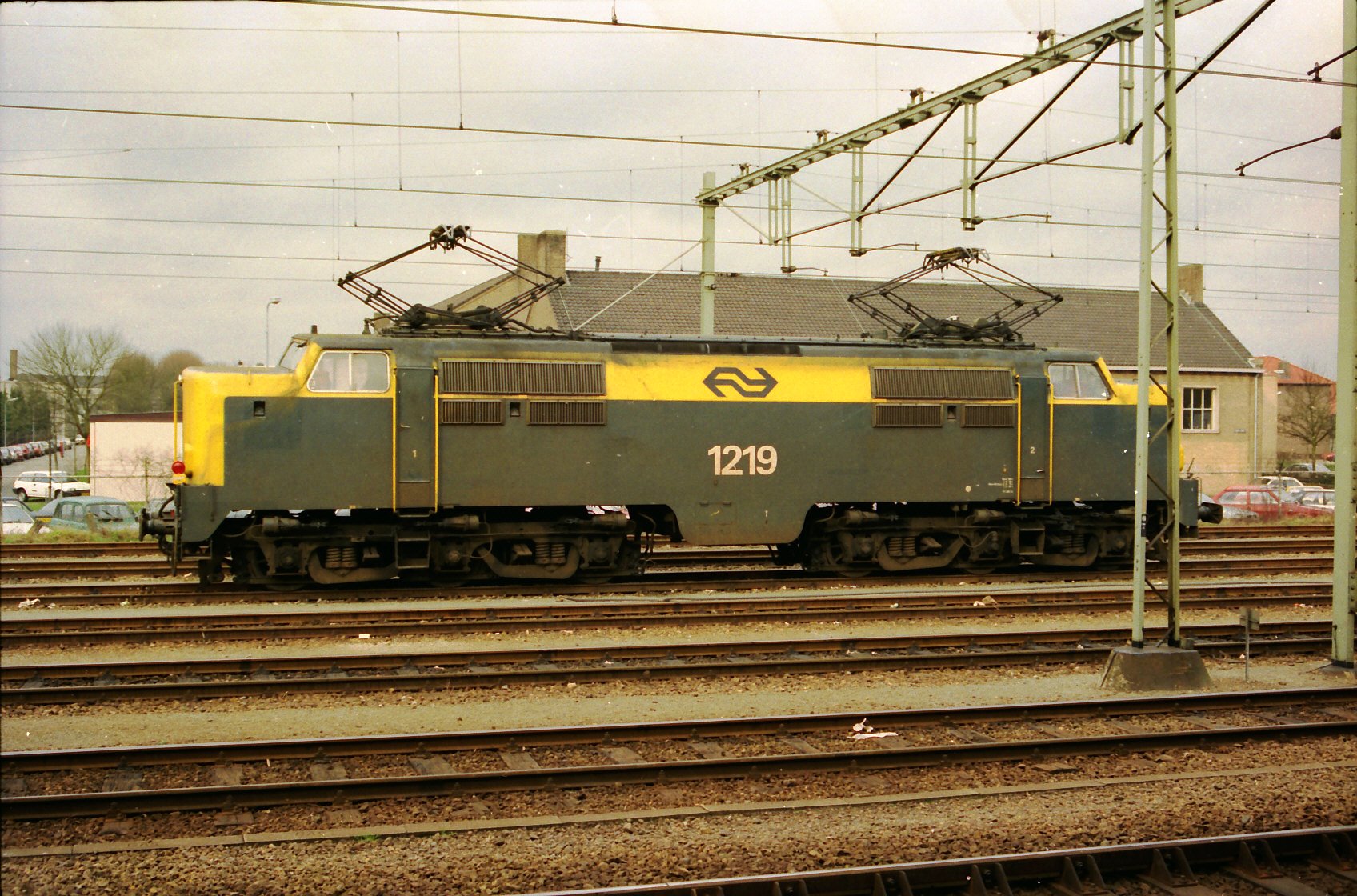
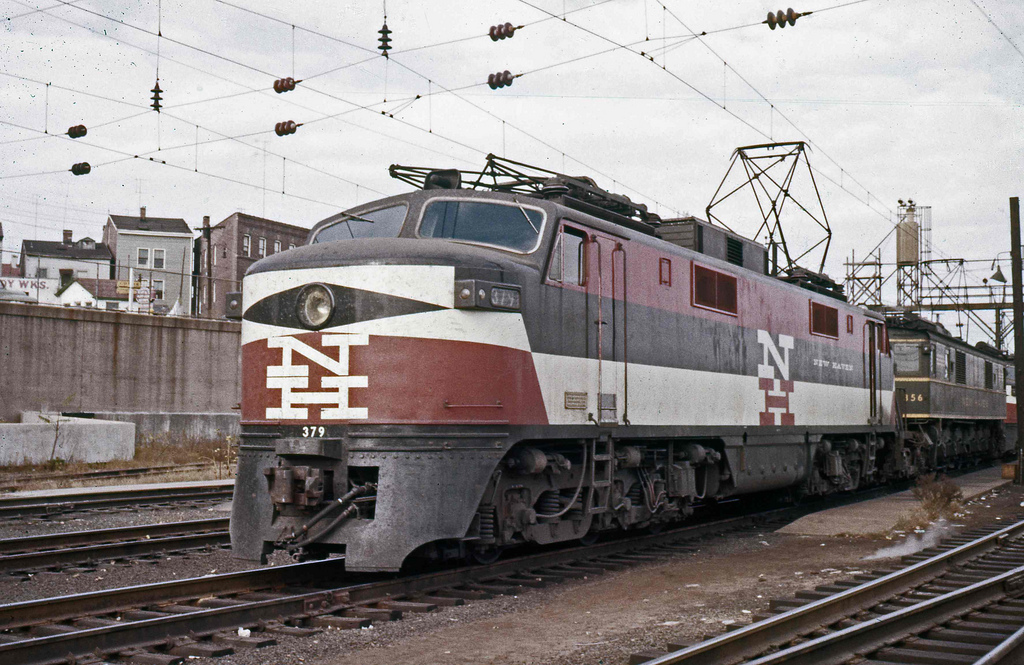
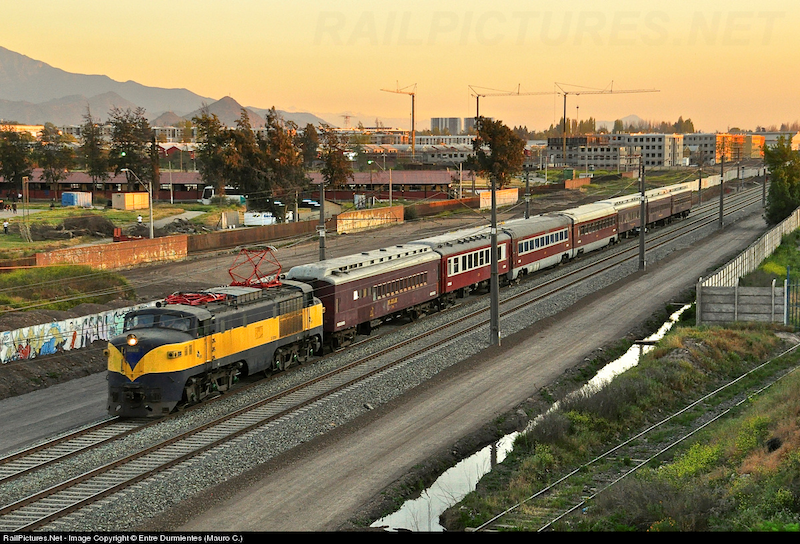
 This blog was triggered by what I think is a really wonderful picture of a New haven EP-5 on the ready-track. The other pics are all post-WWII US designed electric Co’Co’ locomotive versions that are in fact family. In judging this it should be borne in mind that Westinghouse had closed its traction-equipment doors in 1953 and Baldwin did the same in 1954. General Electric took over the job of manufacturing electric loco’s from then on, but it is absurd to think that GE didn’t vacuum up relevant Westinghouse and Baldwin traction people for their own good. With other words, Baldwin as well as Westinghouse know-how must have informed whatever General Electric did from 1954 onwards. Anyway, after the Dutch 1200 in 1950, first the New Haven EP-5 followed in 1954 and then the Chilean locomotives followed in 1960.

Netherlands Railways class 1200 Co’Co’
New Haven & Hartford Railroad EP-5

One of the better looking post-war US electric locomotives, the New York, New Haven & Hartford Railroad EP-5. Launched from 1954, this was a complex piece of equipment for its day. GE got the order for ten of these from a cash-strapped New Haven and in order to do the best job possible, they convened a committee of electric traction specialists (no doubt by then out-of-work Westinghouse people included) to analyse the problems with the Baldwin/Westinghouse E2c and E3b ignitron rectifier locomotives for the Pennsylvania Railroad, the “Westinghouse Rectifiers”, and look at ways to avoid running into the same problems again. One of the issues on those Westinghouse loco’s was the heat generated and the problems encountered to dispel it. Things would not be easier for the 2.98 mW proposed NH machines, which would have to deal with 11 Kv 25 Hz and 60 Hz AC as well as 600 v DC. In order to get an idea about the best lay out for these loco’s the designers came across the 1948 design for the above very similar Dutch loco’s. It was instantly clear that for the jobs proposed only a double-ender would do, as was in fact the case on all the New Haven and Pennsy electrics bar the for freight conveyance designed Westinghouse and GE experimentals of 1945. This meant, however, that like the ignitron rectifier experimentals, this AC-DC rectifier once again would be a rather well-stuffed machine, as not only would a big transformer with tap-changer but also 12 (2 per traction motor) ignitron mercury-vapour rectifiers need to find a place, as well as resistance banks to control the locomotive on the 600 V DC track in the New York area on the way to NY Central station rather than Penn station. And the six DC traction motors did their bit to generate heat, whereby on top of it all two cabs instead of one needed to be included in a none too generously spaced body. Which left no generous empty rear-end where some of the electric kit and cooling equipment could find a place. As a result these locomotives, however good they were at their job, had a tendency to overheat, especially in the Park Avenue tunnels under Manhattan, despite the powerful ventilation equipment installed that challenged the hearing of those on platforms when these machines passed by. Their nickname “Jets”, (straalvliegtuigen), says it all. And yes, more than once they set themselves alight. Their history reads like wobbling from crisis to crisis, hiding the fact that they were actually rather good at their job. Had, for instance, silicon rectifying equipment been available (or installed during an overhaul later in the 1960’s) it is doubtful that these machines would have had the problems they encountered with their installed kit. And the history of electric passenger traction on the Northeast Corridor would then have looked markedly different: it is doubtful that the GE-built Amtrak E-60 would have ever had a chance. All these machines were out of use in 1977 and by 1979 they were all scrapped. For a small but technically and design-wise very influential railroad like the New Haven it is remarkable that none of their traction appears to have been set aside for a museum. For this machine one needs to go to Chile or The Netherlands to get an idea of what they kind of looked like, for the EP-4 one needs to visit Chile or Brazil to find spin-off examples and the EP-3, one of which with number 156 is visible behind 379) is plain history to the best of my present knowledge. But, again, look at the details of number 379. The trucks are kind of similar to the regular drop-equalizer bar trucks of the 1200, but not quite. The weight of the loco is evident in the fact that extra primary coil springs were added at the very end of the trucks. For a machine with known heat-management problems, look at the (later added, after fires) comparatively small ventilation grilles in the sides. The main ventilation takes place through that box on the roof, where in the tunnels the ambient summer heat congregates as well. Find the DC pick-up shoes and shoe-fuse boxes at the inner ends of the trucks. And those little square flap-covered entrances either side of the bodyside ventilation grilles, are these the sand-filler openings? See the tightlock coupler with the brake and main reservoir pipes and the speedometer connection going up into the cap from the axlebox nearest to us. Most of all, the red/light grey and black Patrick McGinnis colour scheme that a present Dutch operator tried (but failed) to emulate on a 1200. And the Raymond Loewy set up of marker and reporting light clusters either side of the headlight. And what a lovely, clear picture; I dearly wish I could have made that.

Ferrocarriles Del Estado de Chile E-32 Co’Co’

Chile, the Ferrocarriles Del Estado de Chile. The machine shown is an E-32 Co’Co’, meant primarily for freight. The Bo’Bo’ passenger variety could be seen on an earlier picture I sent of an E-30 and an E-29 (the NH EP-4 clone) awaiting their next assignment. There are a number of things that tell me that this is most likely a special, like we see them running on Netherlands Railways with the 1200. Given that a) I read that long-distance passenger rail-traffic is virtually defunct in Chile, given that b) this is clearly a site where a city is being extended into further suburbia, and c) given that the tracks have been most thoroughly done up and look spiffing, a credit to messrs Plasser & Theuer, never mind that the train is d) composed of at least three generations of suspiciously clean looking rolling stock where normally one saw trains lashed up from one type of, but much dustier, coaches, I can’t be very far amiss with that assessment. Obviously, the fact e)that someone was train-mad enough to sit there in the setting sun to take a picture of a train is a further indicator. But look at the locomotive and scroll forward and back from notably the NH EP-5. Well, this machine is Italian-built and far and wide advertised as such: General Electric or Westinghouse, let alone Baldwin, are nowhere mentioned. But look at those markerlight/reporting light clusters, the clearly US drop equalizer bar trucks, that ever so US stairway to heaven right where the PRR E2c and E3b and the RENFE 278 have it, and most of all where NS 1200 would have had it had Baldwin had its wicked way and a detail like that ventilator box on the roof. This has very little to do with Italy per se, they built absolutely completely different loco’s there. This machine has everything to do with Baldwin, Westinghouse, General Electric, the New Haven and Pennsylvania Railroads and the Italian builders just had the honour of putting the machines together. Despite their nickname “Gina Lollobrigida’s” due to their well-rounded front ends, they really are mainly New Haven EP-5’s. The history is in the book, on which I’m working now to rewrite it is English.

New Haven EP4

January 9th, 2019

New Haven EP4 ( (c) railpictures.net)

This is a picture that, I honestly admit, makes my heart ache. The photograph is from the John Dziobko collection, to be found at RailPictures.Net, which heavily features the NH and PRR East Coast electrification and does contain quite a few real gems. A New Haven EP-4 with its train of typical 1950’s Budd ribbed-side stainless steel coaches, stopped in a wayside station (observe those illegal crossing pedestrian-protected high-speed through tracks to the right of the machine) on its way somewhere between New York and Hartford or New Haven v.v. This is General Electric AC tap-changer technology from 1937 that, two years later, would feature on the iconic PRR GG1 with the same 2’Co’Co’2′ axle arrangement, but a machine that would sport a completely different look. Purely from the aesthetic side, this is the sort of stuff that cartoonist R. Crumb used; US Art Deco writ large. Clearly pre-dating Raymond Loewy’s influence, as he hated rivets that spoiled the smooth “streamline” looks. Speaking as an ex-train driver, though, I’d rather work this New Haven machine than a GG1, seeing the absurdly minuscule windscreen that a GG1 driver was allocated to do his job. There are some interesting in-cab video’s on YouTube, never mind Amy’s pics of number 4800 in the Pennsylvania Museum of Transport, to give you an idea what is talked about. This really is a locomotive that set the classic US mould, no doubt about it: much what the later NS class 1200 Co’Co’ was about as well.Details? Look at the low platforms, making an already big train appear to tower even higher. And to me, as an ex-driver; those windscreen wipers! On the Gatwick Express we had similar “oh sorry” afterthought-stuff like this on the class 73 ED locomotives as well, now duly changed on the few surviving refurbished and re-powered examples that are still around in Scotland. On the ones I worked they were still vacuum-operated and it took a lot of distraction from one’s primary job of observing signals to get them to work anywhere near properly. On top of which they had a tendency to self-destruct immediately you switched them on, due to the violence with which they would come to life and smash their rubber wiper bit against the window-frame. After that they wiped a quarter circle of about an inch width, which turned observing signals, especially coming through non-stop at East Croydon during a rainstorm, into a bit of a guessing job. I just suspect it could be the same here, seeing their rather diminutive size and the odd way in which they’re stowed. But also having seen pictures showing EP-4’s with two wipers, neatly parallel, per windshield window.Windshield wiper ructions were in fact the reason that I carried a a small adjustable spanner and screw driver in the bag. There were four windscreen wipers available (double-enders like this EP-4 machine in push-pull configuration with a remote control vehicle at the opposite end) and therewith one could perform quick exchanges of broken against healthy wipers at London Victoria or Gatwick Airport station. Got in fact ticked off for doing that, as during rainy weather one invariably ended up with one or two broken wiper blades for disposal in the cab and a same number of no-squeegee carrying wiper arms resting against windscreen windows. Which looked ridiculous, for which reason fleet people had an issue with us doing this: we should have telephoned them. But they’d never come out to Gatwick Airport or were late at Victoria due to staff shortage. And there was no answer against the claim that if we weren’t allowed to do this, we would have to stop operating during a downpour. Maybe British Rail as once was would actually have considered that option, but the privatised railway couldn’t forego the pennies.Then, sticking with the picture, there’s a Pullman rubbing bar above the coupler: something that can be seen on passenger stock fitted with Janney type knuckle couplers in the UK as well. The coaches behind the loco have the same type of bar incorporated in the covers for the walkways between the head-ends of two vehicles, which suggests that the door in the nose of the loco could be used for staff to transfer from loco to train and vice versa. On the other side, remembering the Washington Union terminal station accident on the 15th of January 1953, when a GG1 with The Congressional from Boston couldn’t stop due to “brake failure”, smashed through the bufferstop and sank into the undercroft into the postal area below, this feature might actually protect the brake air-pipe cocks behind it. The accident was triggered because a cock was pushed close by the vehicle that was coupled to the one where the problems started that day. The loco-headlight is the usual US version, not yet of the sealed-beam type, and the red marker/tail lights can be seen either side. Much to my surprise they are put together in a sort of reporting/ marker light cluster as first used by Loewy, but this machine has no loco-numbers in the sidewards showing lights that would make them into proper reporting lights. It was Loewy who did that in the early 1930’s when streamlining Pennsy K-4 Pacific steam locomotives and then developed the theme when streamlining the PRR T1a steam locomotive. After which they became a typical North-Eastern Corridor feature, the GG1 had them, and they are recognisable even on other US and foreign networks that used GE, Baldwin and Westinghouse plans. Even GM-EMD built a few diesel-electric locomotives sporting them.
Then, most of all, look at the driver/ engineer hanging out of his cabside droplight, looking back along his train: a classic railway operating picture. The door behind him open; probably his second man is standing there (or, somewhat unlikely here, but undeniably an issue on the NH and PRR electrics , it is hot on the machine). Looking further along the train there is a uniformed man standing with his back toward us. He can’t be anything but the conductor, looking back as well: Are they being delayed? What an absolutely glorious image of the working everyday railway!

New Year’s Blog

January 6th, 2019

Dear friends and readers, I hope the new year started well for each and everyone and that no one feels compelled to spend too much time in gyms and on running tracks to get rid of being bloated and too much weight. In this blog I welcome Patrick Morrison, director of the Railroad Museum of Pennsylvania. I hope you enjoy reading my rantings and ravings Patrick. Similarly the staff of Op de Rails, Hi guys, I hope you like what you read.

Re the subject of my transport writing activities I ran into a few items that triggered the flow of commenting that I am so very prone to. Primarily the stuff that still keeps me going is that of US East Coast electrification, from top to bottom the New Haven railroad, the Pennsylvania Railroad, the Virginian Railroad and the Norfolk & Western railroad. All buyers of Baldwin, Westinghouse and General Electric equipment and all with tendrils stretching out to what would one day be the Netherlands Railways series 1200 electric locomotive.


(1) What we see on the attached picture 1 is a 1937 vintage General Electric built New Haven Railroad EP-4 locomotive number 361, with its EP-3 2’Co’Co’2′ boxcab forefather the machines that inspired the PRR to adopt the same axle-configuration for their legendary GG1. This loco is rolling off the catenary suspended AC-electrification with pantographs locked down and using 600 V DC from the bottom contact third rail that can be spotted amidst the tracks. Clearly this train is near the end of its trip from New Haven on its way to Manhattan. But it is not yet underground in the Park Avenue tunnel that is mentioned several times in my book on the Baldwin/ Westinghouse electric locomotives in Europe after WWII. What is clear is that the protection against heavy road traffic on level crossings of the people behind the windscreen here is materially different from what PRR did with their John R. Dohner and Raymond Loewy Steeple Cabs after the 50 mph/ 80 km/h level-crossing accident between boxcab P5a 4772 hauling the Spirit of St. Louis with a loaded fruit-truck at Deans NJ on the 3rd of January 1934, which cost the life of engineer/ driver A.C. Bollinger. On this machine we see what would become the sort of nose-end that defined the US passenger loco right through to very recently and which is in fact what the Dutch class 1200 and its Spanish counterpart 278/ 7800 would sport. The people behind the windscreen have been lifted high out of harm’s way to right under the roof and are set back behind a reinforced “nose”. Look at the cartoons of R. Crumb, depicting the US design language of the fifties, sixties and seventies, and this is what you see. These locomotives also spawned export-versions to Argentina (the V-8) and Chile (the E-29), whilst it isn’t that hard to see a design-connection with the bigger, equally GE built “little Joe’s” that didn’t quite make it to little Joe Stalin’s homeland.The two coaches behind the loco represent two distinct era’s of US passenger vehicle construction. The first one is a modern (1950’s) welded-steel stressed skin (integrally built) vehicle, very likely fitted with air conditioning. The second one is what would in the US be called a heavyweight; a pre-war coach with a comparatively lightly built body on a strong riveted steel under-frame, in this case probably also fitted with air-conditioning as all the windows are closed (see below). Many of these vehicles, especially constructed for high-speeds on long trips, would run on three-axle bogies/ / six-wheel trucks for directional stability, to counter the tendency to start hunting (veteren) of the riding-gear. These were also the vehicles that would quite distinctly influence coach-building in Europe from about 1875 till 1920, notably through the ministrations of the Royal Prussian Railway Administration KPEV (Koenigliche Preussische Eisenbahn Verwaltung), with their clerestories on the roofs, their drop equalizer two-axle or three-axle bogies and their vestibules with through-connections at the vehicle ends. Funny thing is that the actual Prussian bogies were used on new-construction of other European networks quite some time after the Prussian railways themselves had already dropped them and adopted this American type of bogies, the characteristic axle-bearing ends of the drop-equalizer beams being called swan-necks here (Schwanenhals, zwanehals). Read up in the beautiful John H. White Jr. books on The US Railroad Passenger Car for the US side of the story, for the Dutch/ European side there is Bert Steinkamp’s excellent De Erfenis, de houten rijtuigen van de Nederlandsche Spoorwegen 1921-1956, and for the French side (they used the drop-equalizer beam trucks for many decades under their passenger stock) J-L Flohic’s Le Patrimoine de la SNCF et des Chemins de Fer Francais. Furthermore, internationally (don’t overlook the Japanese) there are some very good websites on the subject.
What actually set me off discussing this picture, though, is noticing a very human aspect visible on the loco. New York City summers can be very hot, as New York winters are known to be cold. Clearly this train is rolling easily, none too fast, along the DC-tracks toward its destination, as the nose doors, all cab side-windows and the rear cab doors are all open. The people working this machine are not comfortable in the heat, so much is clear. That reminds me of my own days behind the windscreen in the UK, where on the DC stock South of London invariably two 100 W bulbs would be burning in the box displaying the headcode through the centre-windscreen, thus providing an efficient convection heater in the cab even when the thermometer got stuck at, say, 30 degrees Centigrade. Air-conditioning? On the Southern? You must be joking! On the Great Western, the Inter-City railway from London Paddington to the West Country, things were even more fraught. Notionally we did have air-conditioning on those Diesel-Electric High-Speed trains, but when needed on brilliantly sunny days they usually went OOU (Out Of Use). At 125 mph/ 200 km/h (if the diesels didn’t overheat and intermittently stopped pulling their weight) opening the droplights in the entry doors (the fact that one could even do that in such high-speed front line Inter City trains like these! But I digress) was out of the question for understandable reasons. A manager travelling with me once had a thermometer app on his phone and measured no less than 42 degrees C. Better air-conditioning came with the thorough upgrade with the new German MTU diesel engines that shortly thereafter replaced the original Paxman Valenta equipment with their characteristic (some called it beautiful) roar.


(2) Photographed at Marazion neat Penzance, Cornwall, in the grass and shrubbery, we encounter an original UK Pullman coach that, after its luxury railway life, was used as a so-called “camping coach”. These vehicles were designed (and initially built) in the US. The very recognizable US truck as shown, with its drop-equalizer beams between the axle-boxes and its external bridge-frame for the secondary suspension bolster, shows the vehicle has faced hard, very salty Atlantic winds for a very long time (picture taken late in the 1980’s). I read (and noticed by its absence later) that the vehicle was removed and found a secure home in a museum collection, but I forgot to write down where. Just to show a typical three-axle high speed (for the time) passenger vehicle truck. Britain is good at this sort of wonderful surprises, incidentally. Where but over London in the late 1990’s could you find a Luftwaffe Messerschmitt plane from WWII cross your line of sight when leaving London Victoria station with a Gatwick Express? Where but in the UK are steam locomotives working hard on main line specials a regular sight but in the UK? One aspect of my previous job that I miss quite dearly, I admit.


(3) The Dutch version of the Prussian standard bogie (KPEV Regeldrehgestell) in the Railway Museum in Utrecht. The primary suspension is very much what could be expected in the UK at the end of the 19th, beginning of the 20th Century as well, as is in fact the secondary suspension. The top of the bolster plank is showing the receptacle for the kingpin in the centre and the two rubbing plates resting above the leaf-springs either side. It gives an idea how the secondary suspension works, but what is missing is the view of the swing links from the top of the bogie frame going down to carry the bearers that support the underside of the leaf springs. You can see the top half of one of those under the nearest half of the A-frame of the brake-rigging, on top of the bogie around the turning bowl. Notice also the brackets at the ends of the primary suspension leaf-springs, clearly designed to catch what’s left of that spring if their attachment to the coil springs under them failed. This would prevent derailment but the vehicle would be leaning, possible out of gauge and therefore prone to hit vehicles or structures along the line, and had to be transported with reduced speed to any nearby siding to take it out of service. The axle boxes clearly have plain bearings with lids that could be undone and opened for a quick top-up with oil in case of heating up. So far I photographed eight international versions of this bogie, from Spain to the Czech Republic, but have as yet not found an actual German vehicle still sporting them.


(4) Again the US influence on British (well, the world) front-line coach building. A (this time restored) Pullman vehicle in the York Railway Museum, sporting a four wheel/ two-axle drop-equalizer truck. Again, this truck shows absolutely undiluted US practice; in the European version the drop equalizers would normally be fitted outside the bogie-frame. The original Prussian drop equalizer bogies, however, would have very much looked like these.


(5) Those wonderful surprises in the UK: a switch/ point (wissel. The original English expression used was switchpoint, incidentally) in a quarry track fashioned out of stone blocks. This is the Hay Tor tramway high up on Dartmoor. Believe me, this worked, with horse traction.

Another bit of Ruminating

13 December 2018

No book, no thinking about how iron-age secondary suspension made a mess of the future of an electric locomotive. Train brakes? Couplers? Pennsylvania Railroad? Don’t want to know right this moment!
A few things occurred, or are still going on, and made me ponder about things that occurred in my life. To start with, I attended a paper being read at the Swindon (Wiltshire) office of Network Rail. It’s called Western House. Network Rail is the state operator of the rail network in Great Britain; compare it to ProRail in The Netherlands, BaneNor in Norway, the DB Netze in Germany and you get the picture: it concerns the (semi-) state people who spend taxpayer’s money on track and signals and get a hell of a time defending their backsides when things go wrong. The person who read the paper, incidentally, was a very nice gent from the Rail Safety & Supervision Board RSSB, the rail safety approval organisation in the UK. Someone I had never met before, but who much to my pride and joy knew my name when I introduced myself. It turned out that he read the IRSE-News magazine, the house magazine of the Institution of Railway Signalling Engineers. The editor of that magazine invited me to write an article about signals used specifically by traffic controllers to allow train-drivers to pass a failed signal at danger without the traffic controller having to call that driver and then hand out notes permitting the train past that signal at danger. The cause for unrest in this matter was the dreadful head-on collision between two electric multiple units on a single track line near Bad Aibling in Bayern/ Bavaria in Southern Germany. Funny thing is that the rule book extension in the UK to allow working such a signal covered no less than 24 pages. Anyone with a bit of railway experience can see that that is likely to become troublesome, as no one involved in controlling or driving trains is going to learn all those provisions by heart, remember them and apply them faultlessly when the time to do so has come. Needless to say I was seriously chuffed when hearing this gentleman talk about the article. Also because earlier part of my contribution to this debate had been used in a comment by someone with far more authority than I have to discuss these matters. It was a Professor from the University of Braunschweig (Brunswick), who was involved in altering the (indeed rather too loose) rules governing the use of such a signal in Germany. This is after at least three fatal accidents there, during which erratic use of this facility played a significant role; readers of my book check out the chapter on the Zs-1 Ersatzsignal at Bruehl. Another thing I mentioned in the article that was commented on -and, in fact, altered- was the use of train radio in such an emergency situation, when a traffic controller, probably beset by a bad case of anxiety, needs to stop train traffic quick. The set-up in Germany was nothing like a red emergency slam-button on top of the radio set or so, the sort of thing one would expect. It concerned going into the menus of your radio and find the right page and then the proper click-button, which at Bad Aibling nevertheless still could have avoided the collision from happening. The traffic controller, who had been entertaining himself playing games on his mobile and erroneously used the discussed signal to let one of the trains depart into a single-track section occupied by the approaching other, failed there as well and therefore the trains hit.
I got that idea about the use of a properly equipped and set-up train radio from the Ladbroke Grove head-on collision on the 5th of October 1999, incidentally, where alleged bad use of available radio facilities, loudly criticised in the odious tabloid newspapers here, further soured the due to the accident already badly hit health of signaller Dave Allen. It was in fact the accident which caused me to meet Stanley Hall, who gently but with steady hand pushed me into writing. Nonetheless, recognition from railway people you never met before, who recognise your name and query whether it was you who wrote that article, benefits the mood in no small way. Even the dreadfully hard seats on modern trains could not dampen the good cheer afterwards on the way home. Otherwise the new Hitachi hybrids are well equipped and seriously fast trains.
The venue in Swindon for reading the paper was pure railway. They manage to make them have the same sort of atmosphere all over Europe. The paper to be read dealt with the Clapham Junction collision 30 years ago. Interesting time that was, precisely half a year before I moved to England. One contact within British Rail -as was- I had in those days was Jim Vine, a senior traction engineer and a typical all-round railwayman if ever there was one. This type of person can be found among the readers of this blog and they don’t seem to grow the sort of all-round railwaymen like that any longer. Jim was in many ways my mentor as far as finding my feet in safety on the railways was concerned, especially with a completely unprotected 800 Volt DC third rail close to the bottom of your legs (picture 1 shows a badger electrocuted when crossing the track, between the running rail with the shiny head and the juice rail with the scratched rusty head). I got to know Jim in the late 1970’s during a trip on board the ferry Prinses Beatrix (as was), the Dutch half of the sea-connection between Hoek van Holland and Harwich Parkeston Quay (or Harwich International these days). As I did, he too shuttled regularly between Wimbledon (well, Raynes Park) where he lived and Amersfoort, where he knew friends and which he used as a base-camp for long rail expeditions on the Continent, flashing his BR-manager’s gold penny which, much to my envy, was recognised by train-conductors all over Europe. We kept meeting and talked a lot, Jim and I. As far as the messy Clapham Junction three train collision is concerned, he was made a member of a four-man team that had to conduct a British Rail internal investigation into the background of how it could happen. His conclusions were not a joy to listen to, as indeed were later long nightly talks with one of the drivers involved in the run-up to the collision and taken through the wringer of the post-accident inquiry, Terry Keating. These meetings moulded much of my admittedly probably somewhat over the top interest in rail accidents (initially, later it got worse as it involved all accidents in which professional operating staff had been involved). Jim told me about his utter disbelief how supposedly well-trained and safety-conscious people were able, through non-stop underfunding, bad training and overestimation of ones knowledge of the job, fatigue and badly managed working methods to cause the accident with its 35 people killed and many people injured. Jim simply was unaware of that side of the railway with people in the lower pecking-orders. When privatisation came Jim retired on excellent terms and went to work as traction engineer for Halcrow Plc, keeping an eye on the delivery of electric multiple unit trains for Kuala Lumpur. We regularly met nevertheless until he succumbed to cancer of the bladder at the end of 2002; by then I had already been taken off trains early in 2002 due to the onset of my angina as well as rapidly increasing loss of hearing. Jim, incidentally, was old style British Rail; one had to get used to the amount of alcohol these people could effortlessly take on board. Jim also was a really nice guy to have with you for a leisurely afternoon ride on the Gatwick Express, especially at times of diversions due to engineering work, in the days of class 73 ED locomotive, 5 or 8 coaches MkII modified for Gatwick Express and a GLV remote-control motor-car at the opposite end to take the train back to London Victoria (2,100 horsepower available, 90 mph/ 145 km/h max permitted speed but the trip could be done at 60 mph, 100 km/h). Earlier in his life he had worked hard to get these thoroughly automated dual-power (hybrid, these days) and externally totally unremarkable, non-impressive class 73 locomotives to work, with their three operating modes (Well, four; electric automatic, electric hand-switched, diesel with its own controller or diesel with the electric controller) with three types of brake (straight-air/independent, full air with an excellent Swiss license built distributor system on the loco and, tricky, Westinghouse triple valves on the coaches, electro-pneumatic air and a possibility to work vacuum-braked trains with a proportional valve off the loco air train brake). He was proud of them and loved to occasionally come sit in the 2nd man’s seat and lecture on how these things had been thought out and made to work. He also did some on the job demonstrations such as working the camshaft of the automatic power switching with a special metal tool hovering over bits and pieces charged with 800 Volts DC. Quite obviously we had been told about this and the risks involved and were not actually allowed to use it. Also because in case of electric problems the 600 Hp diesel-electric mode was available to get the train off the main line, or home. But with uncle Jim things were different, and it was great fun. The class 73 in fact were close family to pinball machines going by the amount of rattling electro-magnetic relays behind you, I guess, as suitable traction computers that were able to deal with gaps in the juice-rail, that allowed you to inadvertently ride into such a gap with 1200 Amps on the clock, go flash-bang to zero and then back to full power without going pop and emit smoke, had not yet been introduced on British Rail of the late 1960’s. In fact, Eurostar had a far more sophisticated and computer controlled traction installation but they too did not take kindly to gaps in the juice rail. One moment of glory on one of these class 73 machines was the day that I had been seconded to Sea-Containers Ltd to help out bringing the British Orient Express Christmas Special set, complete with a heavy Bulleid Pacific steam locomotive Nr. 35017 with the name Belgian Marine at the bufferstop-end, from London Victoria platform 1 up the steep ascent to Grosvenor rail bridge back to Stewart’s Lane. Picture 2 shows her shunting off that train after arrival at Stewart’s Lane. Two Gatwick Express traction fitters travelled with me and got really worried about the noises the class 73 made, being used on the electric rather than the diesel. This caused me to travel in series only to be able to quickly switch up and back, to avoid the sort of fireworks that 1,400 Amps would cause going through juice rail gaps close to the platform end and then up the steep grade to the bridge across the Thames. On the train waiting staff were busy to clear the train for cleaning, so heavy shocks were to be avoided anyway to avoid people falling over with the spoils of dinner. It was sheer magic, I loved every second of it.